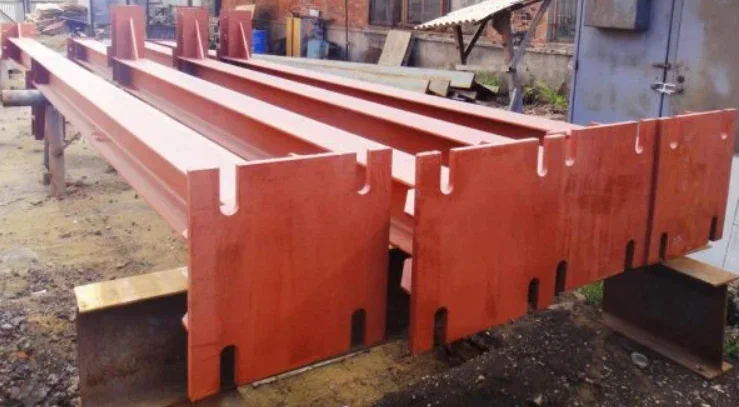
The manufacture of metal columns is a complex and high-tech process that requires precision and compliance with safety standards. First, a column design is developed that takes into account loads, dimensions, and operating conditions. Then the necessary metal, most often steel, is selected and pre-treated. Metal elements are cut, shaped, and connected. After this, the columns are tested for strength and stability. It is also important to carry out anti-corrosion treatment to increase the service life of the structure. Finished columns are checked for compliance with the design and standards.
A metal column is a vertical structural part made of metal, designed to transfer vertical loads from floors, rafters, or other parts of the building to the foundation. It is used in construction to ensure the stability and strength of buildings and structures. Columns include the main vertical rod and the lower part, called the shoe. The shoe is designed to distribute the load from the column to the foundation and is attached to the latter using anchor bolts.
Metal columns come in various types, depending on their shape, purpose, and design features. Here are some of the main types of metal columns:
- Fixed Columns: These are straight and vertical columns that are often used in residential and commercial buildings. They are usually simple in design and are used to support floors and roofs.
- Tubular Columns: These are made in the form of tubes that can be round, square or rectangular in cross-section. They provide high strength with less weight and are often used in modern structures and high-rise buildings.
- Channel Columns: These are columns with a channel-shaped cross-section. These columns are often used in industrial buildings and warehouses where high strength and load-bearing capacity are required.
- Profile Columns: These have a cross-section in the form of various profiles, such as “I” or “H”. They provide excellent stability and can be used in a wide range of construction projects.
- Combination Columns: These consist of several metal elements, such as steel beams and channels, connected together. This type of column is used to achieve the required strength and stability in complex structures.
- Figured columns: They have decorative elements or non-standard shapes, often used in architectural projects to create visual accents and unique design elements.
- Anchor columns: They have a special design for fastening to the foundation using anchor bolts. They ensure reliable transfer of load from the column to the base.